Posts

Artificial Intelligence and Goods Distribution in the COVID-19 Scene

Image
Some recent blogs about COVID-19 have investigated the possibility of utilizing artificial intelligence to fight COVID-19 in more direct ways (predicting fatal cases ( source ), testing COVID-19 using only chest X-ray ( source )) which are very crucial to determine the outcome of this fight against the virus. Even though these posts provide important insights into the situation, by looking at the entire situation from a different viewpoint, one issue that will only escalate over time is goods distribution, especially medical equipment and essential items.  If you are staying in the United States right now, you might know that toilet paper, hand sanitizer, and some other essential products are out of stock pretty much everywhere. In all honesty, panic buying can be accused of most of these purchases and one might arguably defend themselves from the virus without stocking up these essential items since there are a lot of alternatives (body wash, bidets,...). Empty shelves a...

How AI Is Predicting Which Cases of COVID-19 May Become Fatal

Image
The idea of artificial intelligence being used to diagnose and treat disease has been used in science fiction for decades, with movies like Prometheus  and Elysium  (seen below) serving as examples. In these films, machines exist that can rapidly detect and treat illness as well as injury--and even perform a Cesarean section on a Xenomorph growing in your chest! While these machines may seem like typical science fiction nonsense to many, they are not as improbable as you might think. source source COVID-19, or coronavirus, has overwhelmed medical facilities across the globe, and the sheer number of patients is too much for many hospitals and triage centers to handle. Also, due to the novelty of the coronavirus, doctors are unprepared to make hard decisions regarding which patients need ventilators or respirators which puts patients at risk. According to an article in  Computers, Material, and Continua , a team of computer scientists from Columbia University...

Google Robot teaches itself to walk without human help in just a few hours

Image
In a conversation about A.I., there is always one question that gets asked, and that is, are machines intelligent. In our AI class we have had multiple debates and conversations about this particular issue, but we never really got to a point we all agree on. So are machines intelligent? If so what is intelligence? How do we define it? And how do we test it? Tests such as the Turing test and the Chinese room have used approaches such as conversation to test that and help the AI world define that. So what is next?                           Source  Well Google believes they have achieved the first step in making or distinguishing between what it means to be an intelligent machine.  Google researchers have built a four-legged robot capable of learning how to walk without any human interference. Google's Robotics Team and the Georgia Institute of T...

ARTIFICIAL INTELLIGENCE IN 2020 PANDEMIC

Image
                              ‘With great power comes great responsibility.’ Artificial Intelligence, one of the most recent and powerful inventions of humankind, has come into play to fight against the infectious lethal COVID-19 virus.               On February 29, 2020, Washington state confirmed its first death of a patient suffering from the coronavirus. Just 2 weeks later, the state reported a shocking statistic: 40 deaths and more than 600 confirmed cases of the virus. Washingtonians started to call their local hospitals for answering questions about the symptoms and even showing up at ER for medical check-ups. This influx of calls and ‘patients’ not only overloaded local hospitals’ services, but also put lives of many people under risk since they could not reach the health experts to receive appropriate medical advice/...

Facial Recognition for Safety: Where Do We Draw the Line?

Image
Freedom vs. safety. Both are conditions typically sought after by humans, yet we often find that they are at odds with another. With every bit of safety gained, we usually lose an equal amount of freedom, and vice versa. Finding a perfect balance between the two has been a longstanding struggle in human civilizations, and one that seems has not yet been resolved. This conflict has only been amplified with the recent explosion in technological progress, with modern smartphones being able to record and track your every location, call and text conversation. Governments have been able to use this technology to track down criminals and help keep us 'safe', but now it is harder than ever to stay off the grid. Now AI seem to be testing the boundaries further than ever before. Image Source Just recently, London's Metropolitan Police Force (Met) has officially rolled out their  live facial recognition  system across London. This came after a multi-year trial period in Sout...

AI in Soccer: Does AI make management easier?

Image
        In modern soccer, descriptive data analysis has shown the usefulness and advantages it can bring to this sport. Statistics is helping managers of soccer clubs in transferring, analyzing matches, improving players, planning tactics, etc… But now, artificial intelligence is proving that it is the real game-changer that can take this sport to the next level. Data can show only numbers and charts; artificial intelligence thinks and gives advice. Club managers who make good use of artificial intelligence are having huge advantages over their competitors.         First of all, artificial intelligence can pre- and post-analyze matches, as well as giving facts that can help players improve themselves. An English soccer club had been working with IBM on an artificial intelligence project to improve the players and team performance. The best part about it was that the tool had no emotion, which means there was no bias in decision making. The player...

Will Robots Finally Feel?

Image
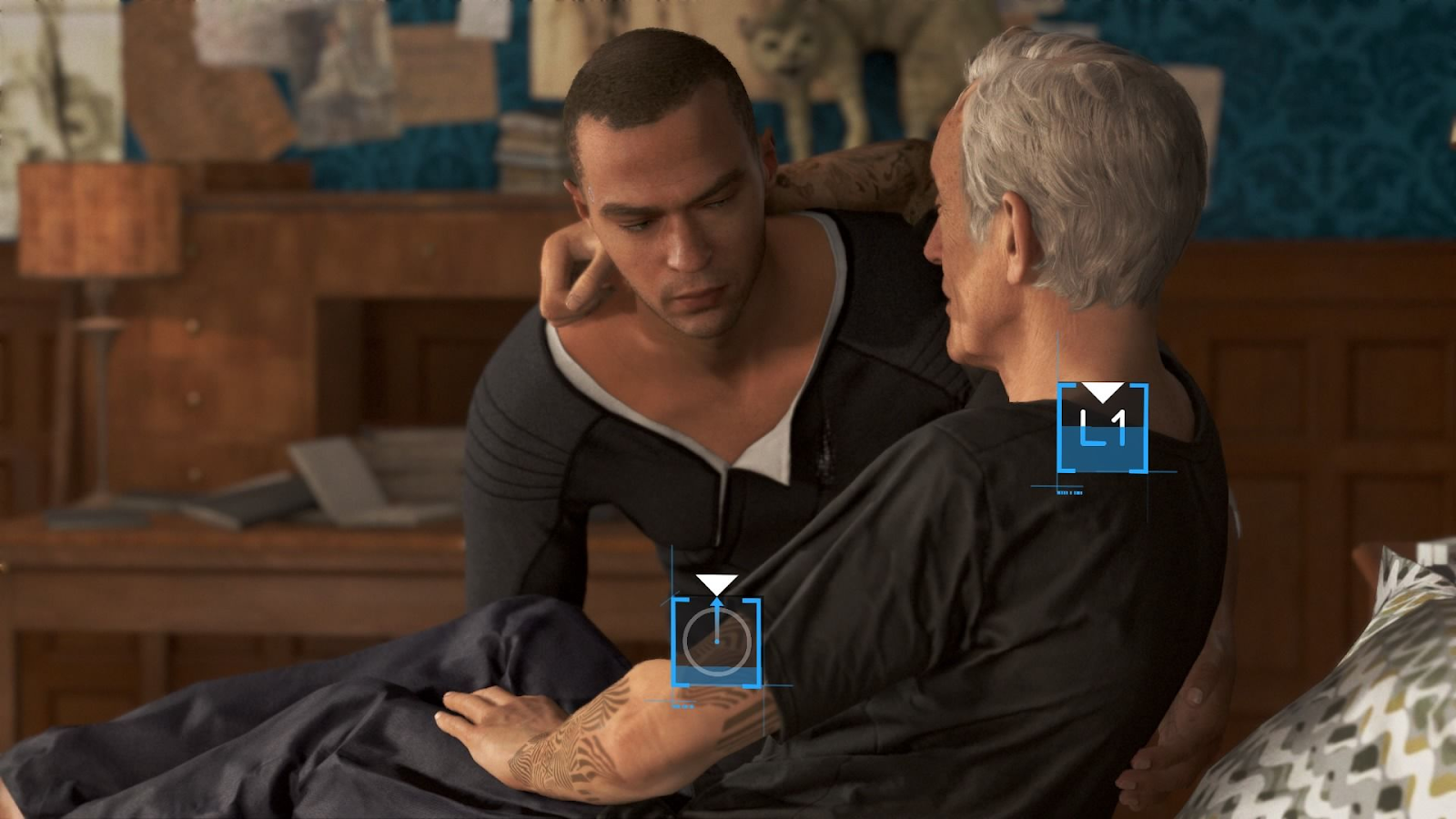
A common issue that arises in discussions about A.I. is that of emotion and sympathy. Everyone is aware of the fear that A.I., whether robots or software could possibly turn on humans if they get intelligent enough to attain sentience - or even before then. But just as likely as that is, is it not also possible for them to feel empathy and maybe even care for us and maybe even each other? This is a subject brought up in various works of fiction containing robots with feelings such as I, Robot , WALL-E , and Detroit: Become Human . Source Well, it seems that robots are being built which “feel pain” depending on the level of impact they receive. This is done by connecting sensors within an artificial soft skin to the robot, which in turn displays different emotions based on how hard it is hit. Affetto is a robot housed at Osaka University in Japan, where a team of engineers has enabled this almost too real-looking child’s head to make a number of facial expressions in res...